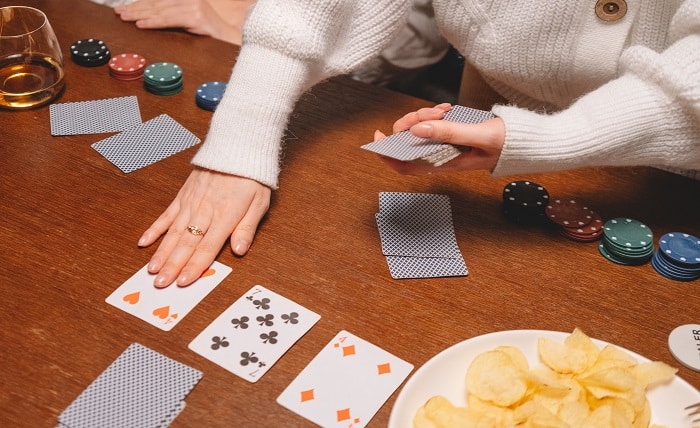
A player can know every hand ranking in Teen Patti and still miss half of what is happening at the table.
I have seen this happen often enough to think that table awareness deserves more attention than it usually gets. Newer players tend to watch their own cards, wait for their turn, and then make a decision. Once the decision is made, their attention resets for the next hand.
More experienced players do something different. They remember what happened before their turn.
They notice who has been entering most pots, who has been folding without much resistance, who suddenly changed their betting pattern, and whether the table has become more aggressive than it was ten minutes earlier.
None of that tells you exactly what another player holds. That is the point.
Good table awareness is less about predicting cards and more about understanding the situation in front of you.
Start by learning the table’s normal rhythm
Before trying to read another player, you need to know what normal behavior looks like.
This is where many players rush the process. They see one large bet and immediately decide that the player must have a strong hand. Someone takes longer than usual to act, and suddenly that pause becomes a “tell.”
I would be careful with both assumptions.
A single action is weak evidence. The same action repeated over several rounds is much more useful.
For example, imagine a player who usually plays cautiously. They rarely enter a hand early and tend to make modest decisions. Later, that same player starts becoming noticeably more aggressive.
The useful observation is not simply, “They raised, so they must have a strong hand.”
It is:
“This is different from how they have been playing.”
That difference gives you something worth considering.
Watch changes, not stereotypes
There is a temptation in card games to divide opponents into simple categories: aggressive, passive, nervous, confident.
Those labels can be convenient, but they can also make players lazy observers.
A player who raises frequently is not automatically reckless. A player who folds several hands in a row is not necessarily waiting for a premium hand. Someone who takes a few extra seconds before acting may simply be distracted.
Behavior needs context.
Suppose a player has been calling repeatedly with relatively small increases in the stake. Then, after several rounds, they suddenly make a much larger commitment.
That change is more interesting than the size of the bet by itself.
Maybe the player has a stronger hand. Maybe they are trying to alter the table dynamic. Maybe they have simply changed their approach.
You do not need to decide which explanation is correct immediately.
The better habit is to remember the change and see what happens next.
Betting patterns are clues, not answers
Teen Patti gives players a limited amount of information because the cards are private. There is no shared board revealing new cards to everyone as the hand develops.
That makes betting behavior useful, but it also makes overinterpretation easy.
Standard Teen Patti commonly involves blind and seen play, with betting requirements differing according to whether a player has looked at their cards. Exact mechanics can vary between tables and platforms, so a player’s action needs to be understood within the rules being used.
This matters when interpreting betting patterns.
A larger bet does not automatically mean a better hand. A blind player and a seen player may have different reasons for making the same-sized wager. A player may also use an unusual bet simply because they want to change the pace of the round.
So instead of asking:
“What does this bet mean?”
I prefer a slightly different question:
“What does this bet mean compared with what this player has been doing?”
That small change in thinking makes table observation much more useful.
Remember the player, not just the result
One of the easiest ways to improve awareness is to remember decisions rather than winners.
Imagine a player wins a large pot.
Most people remember the result: that player had a winning hand.
There is much more information in what happened before the cards were revealed.
Did the player enter the round early?
Did they remain consistent with their previous behavior?
Did they suddenly increase the pressure?
Had they been playing actively throughout the session?
Did their behavior change after winning?
These details create a much better picture of a player’s habits than a single showdown does.
The same principle applies when you lose.
Instead of thinking only, “I had the weaker hand,” look back at what you knew before the decision. If you noticed a meaningful change in another player’s behavior, did you account for it? If you ignored several earlier betting decisions because you were focused on your own cards, that is useful information too.
A bad decision can become a useful observation if you actually review it.
Your own behavior becomes part of the table
There is another side to table awareness that beginners sometimes overlook.
You are not just observing everyone else. They are observing you.
If you always bet aggressively with strong hands and become passive with weaker ones, regular opponents may eventually notice. If you always switch from blind to seen at similar moments, that can become part of your table image as well.
This does not mean you should constantly try to confuse everyone.
It means that consistency can become information.
A player who understands this starts asking a second question before acting:
“What does my decision tell the other players?”
That question can improve discipline even when there is no attempt to bluff.
It encourages players to think about the sequence of decisions rather than treating every action as an isolated event.
Digital tables require a different kind of attention
Online Teen Patti removes some of the information available at a physical table.
You cannot rely on someone’s facial expression, posture, or the way they handle physical cards. Depending on the platform, you may instead have access to betting actions, timing, previous decisions, and other visible elements of the interface.
That changes the skill rather than eliminating it.
For someone exploring a mobile product such as teen patti master apk, the useful habit is to separate genuine game information from interface noise.
Animations may attract attention. Sounds may make a decision feel dramatic. A countdown timer may create pressure.
None of those things necessarily tells you anything about an opponent’s hand.
The more useful information is usually found in repeated behavior.
Who enters hands regularly?
Who tends to leave when the stakes rise?
Who changes their approach after several quiet rounds?
Those observations are more reliable than trying to decode every second of a countdown.
Good table awareness includes knowing what you cannot know
This is probably the most underrated part of reading a table.
You will be wrong sometimes.
A player can make an aggressive bet with a weak hand. Someone can hesitate with a very strong hand. A pattern that seemed meaningful over five rounds can disappear completely in the sixth.
That does not make observation useless.
It means observation should change your level of confidence, not give you certainty.
If the evidence is weak, treat it as weak.
If you have seen the same behavior repeatedly, give it more weight.
If the table changes, update your assumptions.
That is a much healthier way to approach player reading than trying to memorize a list of “tells.”
The best practice may happen between hands
Improvement does not necessarily require playing more and more rounds.
Sometimes the better exercise is simply to pay closer attention during the rounds you already play.
After an interesting hand, ask yourself three questions:
What did I notice?
What did I assume?
What did I actually know?
The difference between the second and third questions is particularly useful.
You may have assumed that a large bet represented strength. But what you actually knew was only that the player chose to increase the stake.
That distinction keeps observation grounded.
Over time, players begin to notice more without turning every action into a prediction.
Table awareness is a skill of context
The strongest lesson I take from Teen Patti is that table awareness is not a collection of tricks.
It is a way of paying attention.
Know the rules of the table. Watch the sequence of decisions. Learn each player’s normal behavior before interpreting unusual behavior. Treat betting patterns as clues rather than proof. And remember that your own habits are visible to everyone else.
The cards will always contain information that nobody else can see.
But the table contains another layer of information in plain sight.
Players who learn to notice that layer do not suddenly gain the ability to predict every hand. They simply make decisions with more context than they had before.
That is what better table awareness really means.