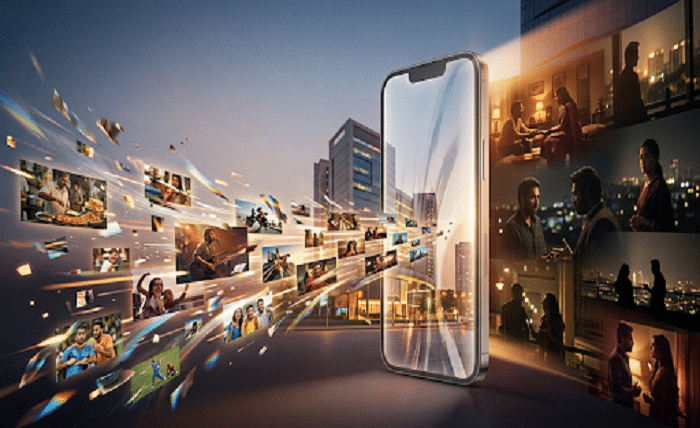
Mobile entertainment in India has evolved far beyond endless social media scrolling. Today, a smartphone is a Swiss Army knife for digital content: it’s a quick-hit video screen during a coffee break, a discovery engine during a commute, and a personal movie theater in the evening.
What makes this transformation so fascinating is the diverse ecosystem of tools powering it. Social platforms drive content discovery, lightweight browser tools handle quick media downloads, and robust streaming apps deliver long-form entertainment. Rather than competing, these services have meshed into a single, cohesive mobile experience. As this ecosystem matures, Indian users are increasingly demanding convenience, deep personalization, linguistic diversity, and frictionless discovery.
The Smartphone as an All-in-One Entertainment Hub
Mobile users rarely stick to just one type of content throughout the day. A typical routine might involve swiping through bite-sized videos while waiting for the bus, checking out photo feeds at lunch, and settling in for an hour-long web series at night. While each activity serves a totally different mood, they all happen on the exact same device.
How Short-Form Content Fuels Discovery Short-form content has essentially become the top of the entertainment funnel. People rarely open a social app knowing exactly what they want to watch. Instead, they scroll until a catchy clip, a trending song, or a familiar actor grabs their attention.
This behavior has fundamentally changed how we discover long-form media. A blockbuster movie might first cross a user’s radar as a 15-second viral scene; a regional TV show might pique their interest through a meme. Social media is no longer just for communication—it is the springboard that influences what viewers decide to watch next.
Filling the Gaps: The Appeal of Lightweight Download Tools
As digital content explodes, so does the demand for simple, purpose-built tools. Browser-based download utilities are a perfect example. When permitted by platforms and copyright owners, these tools allow users to quickly save media for offline reference without bloating their phones with heavy applications.
The main draw here is simplicity. Users can open a website, paste a link, save a video or image, and immediately get back to what they were doing. This growing preference for a “fewer-steps-is-better” approach is now heavily influencing how streaming apps are designed as well.
The Shift to Serious Mobile Viewing
The explosion of short videos hasn’t killed long-form entertainment; they simply occupy different parts of our day. While short clips are for killing time, movies and web series are for relaxing and immersing oneself in a story.
Because of this, modern streaming platforms are treating the smartphone as a primary viewing screen, not just a backup to the living room TV. To make a massive content catalog actually usable on a compact display, apps must get the basics right:
- Intuitive content categorization
- Lightning-fast, accurate search
- Easily accessible subtitle and audio toggles
- Seamless playback navigation
- Highly relevant, personalized recommendations
Navigating India’s Linguistic Diversity
You cannot define Indian entertainment by a single language or film industry. While Hindi cinema commands a massive audience, regional powerhouses—Telugu, Tamil, Malayalam, Kannada, Bengali, Marathi, and Punjabi—form the backbone of the country’s diverse media landscape. Moreover, audiences are increasingly crossing linguistic borders to explore trending regional content, provided good subtitles or dubbed audio are available.
This diversity presents a unique challenge: giving two users the exact same homepage is a recipe for high bounce rates. One might binge Hindi web series, while the other exclusively streams Tamil thrillers.
To solve this, platforms are leaning into language filters and localized curation. Android entertainment platforms such as FlixFox reflect this wider move toward mobile-first, highly tailored discovery. Apps in this category pull movies, TV shows, and web series into an environment where users can effortlessly navigate across different languages and genres, making massive catalogs feel deeply personal and relevant.
The Android Advantage and APK Distribution
Android dominates India’s mobile market primarily because it runs on everything from entry-level phones to high-end flagships. Because device specs and network reliability vary wildly across the country, entertainment services must remain lightweight and adaptable.
Android also offers the flexibility of installing applications outside traditional app stores via APK files. While this gives users more freedom, it also makes verifying the source critical. For instance, a user searching specifically for the FlixFox APK should always verify the designated download source, check the current version, review file sizes, and read installation guidance before proceeding.
Best practices for alternative installations include:
- Ensuring the download source is official and trusted.
- Verifying the app version and device requirements.
- Avoiding similarly named files from shady third-party forums.
- Keeping Android’s security settings enabled, only bypassing them temporarily for verified installations.
A Connected, Frictionless Ecosystem
It’s easy to think of streaming and downloading as two separate worlds, but in a mobile-first market, they are highly connected.
Consider the modern user journey: A viewer sees a clip of an actor on social media. They use a quick browser tool to save a meme about the show. Intrigued, they open a streaming app to search for the full-length movie. Discovery, utility, and consumption all flow into one another.
As users constantly juggle messaging, gaming, shopping, and social apps, they have zero patience for clunky interfaces. Simplicity has become the ultimate competitive advantage. Whether it’s a web tool that does its job in one click, or a streaming app that instantly suggests the perfect Telugu drama, the goal is the same: eliminate the friction between what the user wants and the moment they press play.
What Comes Next?
The future of mobile entertainment in India won’t be won by the platform with the most content—it will be won by the platform that organizes it best.
As smartphones cement their status as the starting point for all digital media, the focus is shifting from quantity to discovery. From a fleeting social media swipe to a two-hour cinematic experience, the platforms that understand this fluid, multi-format journey will ultimately capture the Indian viewer’s attention.