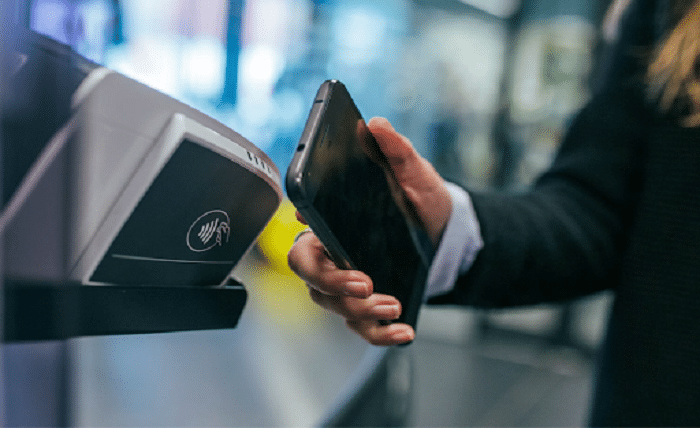
Five years ago, paying online meant typing sixteen digits, an expiry date, and a three-digit code, then waiting for a text message to confirm you were really you. That ritual has quietly disappeared from most checkout screens. A phone held near a terminal, or a single tap inside an app, now finishes a purchase in under two seconds, and the card number itself never has to be typed again. The change did not arrive as a single announcement – it crept in through operating system updates, bank apps that quietly added a wallet tab, and retailers that swapped a card icon for a fingerprint icon at checkout.
The shift shows up clearly in gaming and betting apps, where speed at the cashier decides whether a player finishes a deposit or abandons the cart. A player topping up an account at spinfin casino can confirm a deposit with a fingerprint or face scan instead of hunting for a physical card, and the balance updates before the loading spinner even finishes its first rotation. That two-second gap between tapping deposit and seeing the balance change is now treated as a product metric worth optimizing on its own.
From Sixteen Digits to One Tap
The card form was never built for phones. Small keyboards, autofill that guesses wrong, and a CVV field that forces users to flip a card over turned a thirty-second task into a source of abandoned carts. Industry checkout studies from 2023 put the failure rate of manually typed card forms on mobile at roughly 18%, mostly from typos in the card number or expiry field.
Tokenization solved the underlying problem rather than just hiding it. Apple Pay, Google Pay, and similar wallets store a device-specific token instead of the real card number, so merchants never see, transmit, or store the actual digits. The card network can revoke a single token if a phone is lost, without touching the underlying card at all. This also changes liability: a stolen card number can be copied and reused anywhere, but a stolen token is bound to one device, so it becomes worthless once that phone is wiped or reported lost. Banks that migrated early to token-based wallets reported measurably fewer fraud investigations per thousand transactions, since the raw number was never in circulation to begin with.
| Step | Card form entry | Phone wallet tap |
| Fields to fill | 4-6 (number, expiry, CVV, name, ZIP) | 0 |
| Average completion time | 25-40 seconds | 2-4 seconds |
| Authentication | SMS code or password | Fingerprint or face scan |
| Data exposed to merchant | Full card number | One-time token |
| Typical mobile failure rate | ~18% | Under 2% |
Why Merchants and Players Both Switched
Merchants adopted wallet payments first for the checkout math, not out of loyalty to any tech brand. Every abandoned card form was a lost sale, and wallet buttons cut checkout time by roughly 70% in most published retailer case studies. A gambling operator sees the same math in sharper relief: a slow deposit form during a live sports match can cost a bet that never gets placed.
Players adopted it for a simpler reason – nobody wants to dig for a wallet mid-scroll. Once a phone is set up with Face ID or a fingerprint, every future purchase across every app uses the same two-second gesture, and the card itself can stay in a drawer for months. There is also a quieter budgeting effect worth mentioning: because a wallet tap confirms an exact amount before the transaction fires, fewer users report accidental overpayments compared to typed card forms, where a stray digit in an amount field or a duplicated submission used to be a common support ticket. The friction that once slowed people down also, unintentionally, protected them from a few of their own mistakes.
Security Behind the Tap
Tokenization is only half the security story. Wallet payments also carry device-level attestation, meaning a payment processor can tell whether a request came from the genuine hardware sensor or a spoofed one. Combined with biometric confirmation, this is why several major banks report chargeback rates on wallet transactions running under a third of the rate seen on manually typed card payments.
What Still Needs a Card
Wallets have not erased the physical card entirely. Recurring subscriptions, some government payment portals, and a handful of older point-of-sale terminals still expect a typed number or a swipe. Travelers crossing into regions with limited NFC infrastructure often keep a physical card as backup, and some banks still require the plastic card to exist even if it never leaves a drawer at home.